Review: Barbican’s ‘AI: More Than Human’ exhibition perhaps not human enough?
An intriguing exhibition charting the history of artificial intelligence from myth to inception that, despite significant design flaws, richly explores the technical and moral implications of the “ghost in the machine.
Fig. 1: One of the unfortunately few interactive aspects of the exhibition: an electronic timeline one can swipe through.
The content of the Barbican’s new exhibition, “AI: More Than Human” is exceptional, with objects both foreign and familiar that delve into the inspiration that brought artificial intelligence to life. As a concept, AI (artificial intelligence) is expansive, encompassing real and imagined technologies.
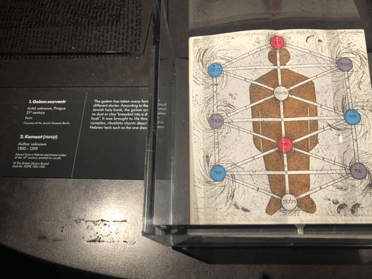
The exhibition explores this with a chronology of AI from birth through life via the physical objects that led to its eventual invisible form. It begins with humanity’s fantasy of animating the inanimate with obscure comics about clay men brought to life magically called “golems” as well as the more familiar creations of artificial life like in Mary Shelley’s Frankenstein.
From those seeds the exhibition progresses to the practical implications of creating artificial intelligence with interactive stations where technology like image-recognition can be experienced for one’s self. Concluding with the more controversial uses of the technology that gesture toward the moral panics still to come, one leaves unsettled and with more questions than answers.
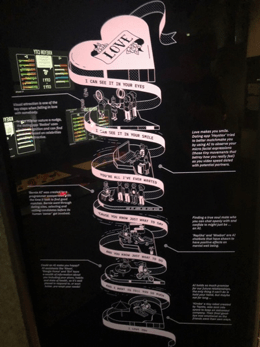
Fig. 2. Left: Algorithm picks your lover; Right: Baby plays with artificial dog like it’s real.
AI: More Than Human is brimming with fascinating information and intriguing items, unfortunately, you might not see it. The exhibition space is too dim: limited lighting and black information placards featuring small white print. More than the ambient darkness, one feels very much in the dark among what appear to be a random assortment of artifacts, particularly at the exhibition’s entrance.
It is near impossible to discern the meaning and connection between objects without reading each information placard, so give yourself plenty of time to really get the most out of it. Expect to take a couple of hours in the exhibition if you do read every placard because unlike the theme, there is very little artificial intelligence at play in the presentation of information.
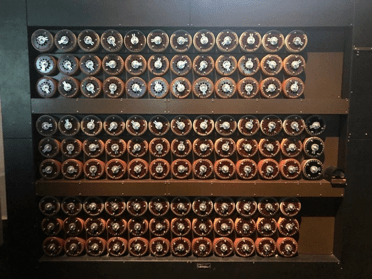
Fig. 3. Seemingly random yet subtly connected objects. Right to left: Kami; golem; the British Bombe.
Perhaps the curators scared themselves off from tech because for an exhibition about it there was shockingly little. Audio and video are fairly scant, which is a shame because, in addition to being more accessible, it would speed the journey through the exhibit allowing one to devote visual attention to the artifacts rather than their explanation. Where there is sound it clashes with various sound effects in other areas to an almost unintelligible cacophony. An audio guided tour on headphones included in the ticket price would have been ideal. Such technology could have also lent a consistent tone and cohesion to an otherwise motely assemblage of objects.
As a society we tend to think technophobic while acting technophilic—decrying the rise of the machine while on it, complaining about the impact of Twitter politics on Twitter. With this exhibit, we can see how we got here and why it is perfectly human to create artificial intelligence.




 Cristina Forever